News
Notes from the team building the Bayes Platform: how we design, test and deploy AI agents for public services.
One harness, three open models: what changes from one model to the next
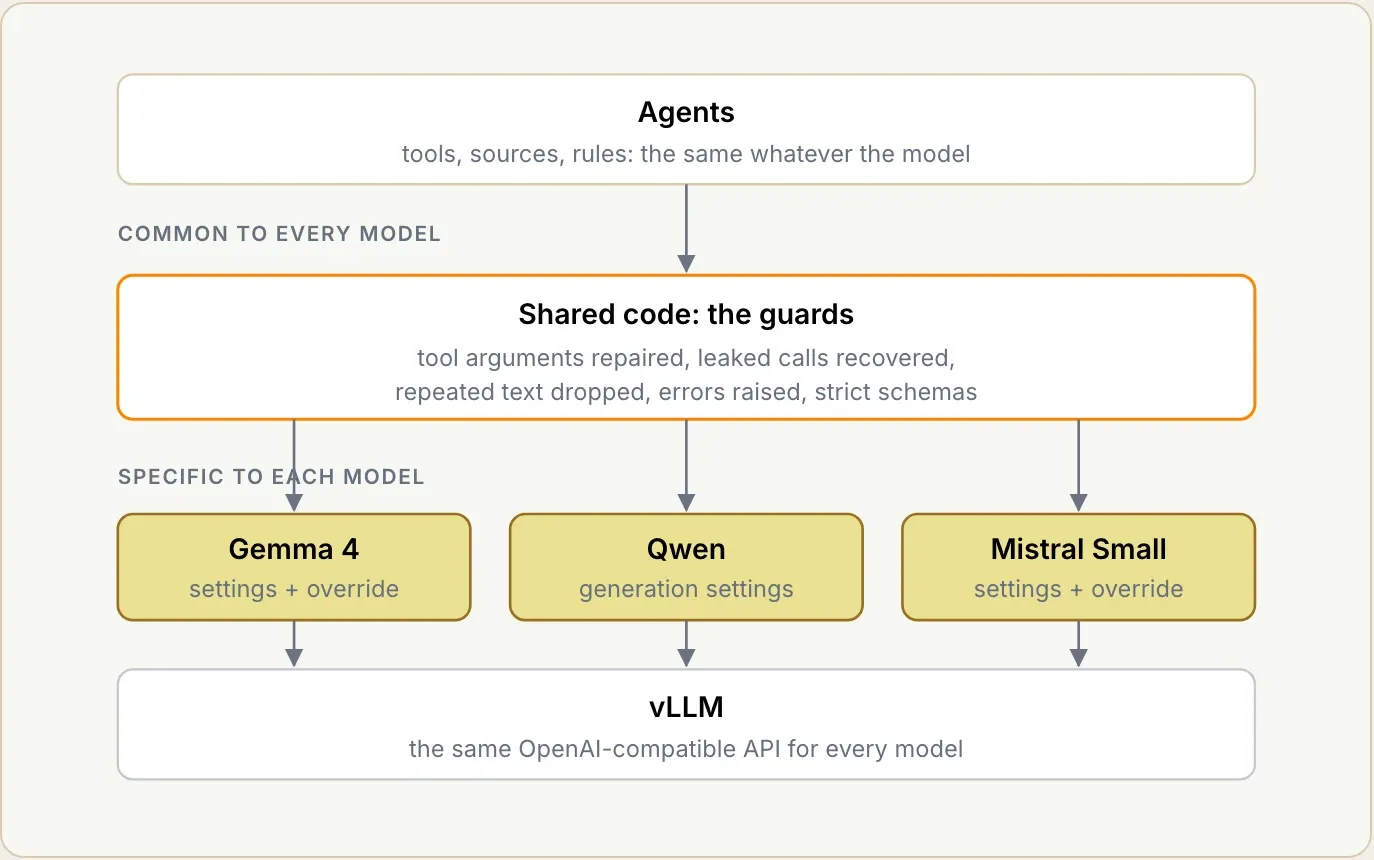
Gemma 4, Qwen and Mistral Small all run behind the same API, yet each one needs its own settings. Here is what the Bayes Platform adapts per model, what it applies to every model, and what it keeps out of the agents.

Can you build an AI without bias?
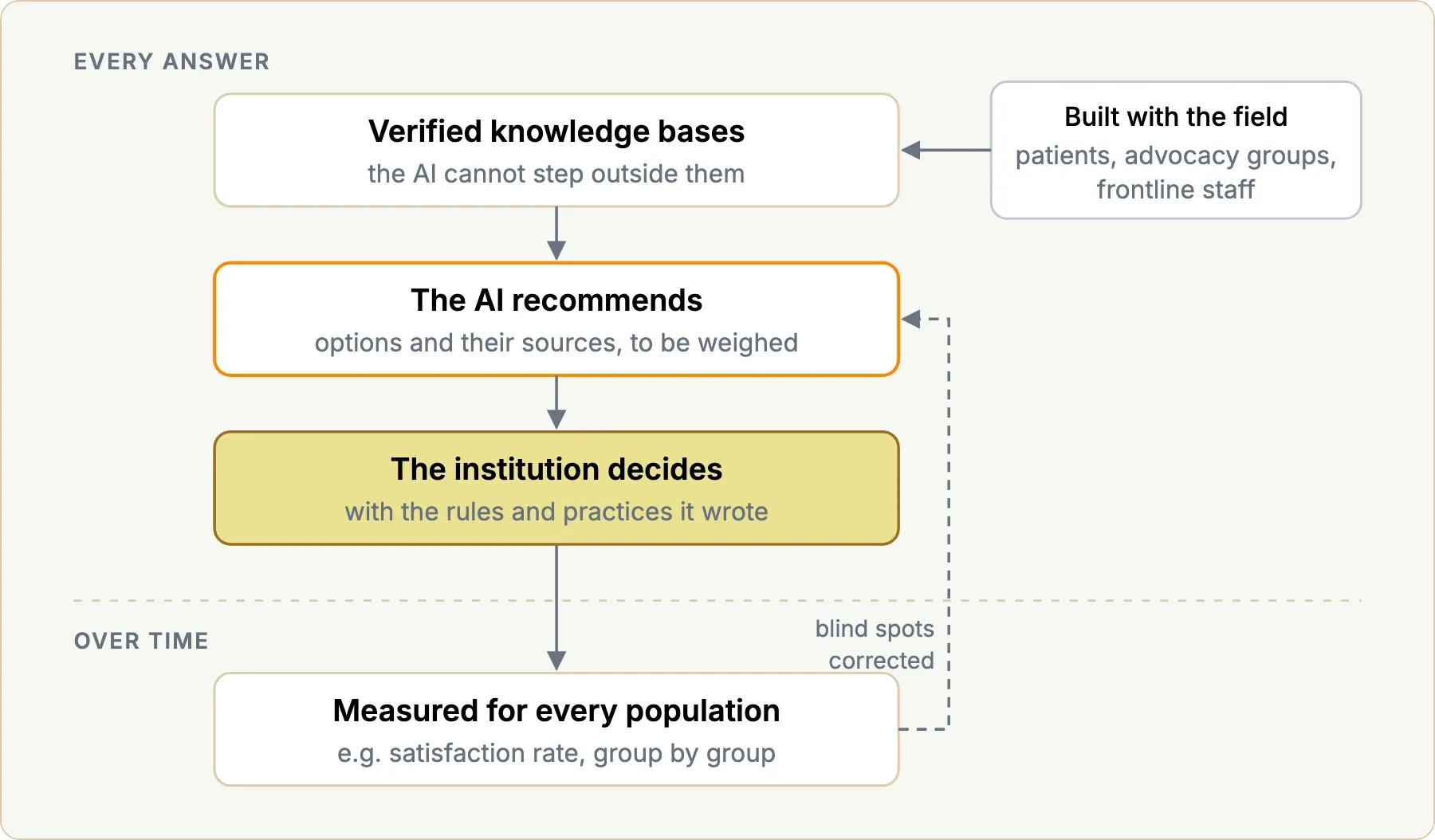
No. But a public service can make sure bias doesn't get to decide. How we design AI tools so the institution's rules keep the last word, and how we check it, population by population.

Why our agents classify each turn after they answer
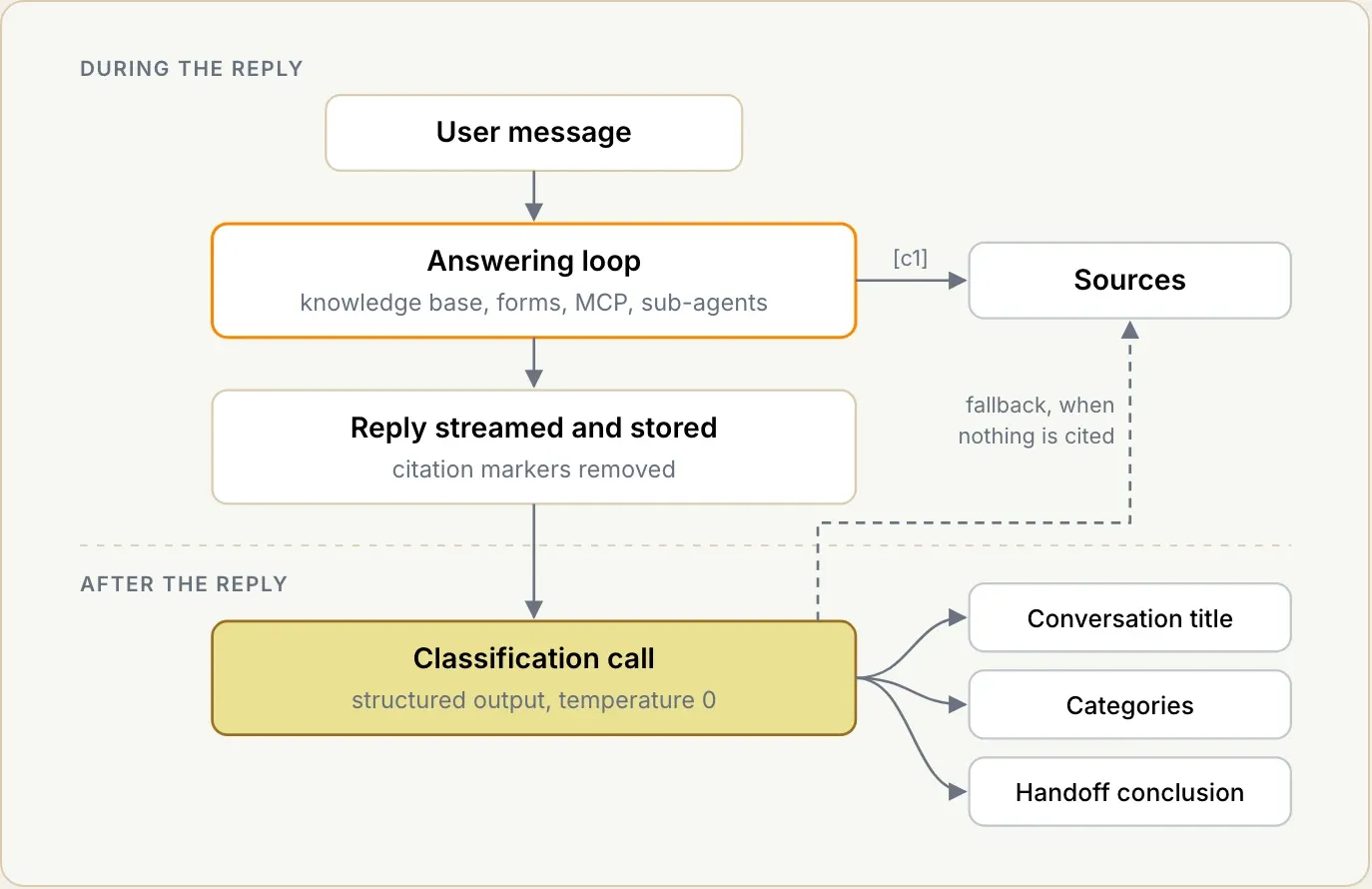
We asked the answering model to file its own paperwork through a mandatory tool, and smaller models showed us the cost. Moving that work to a separate call after the reply fixed it.

Sovereign AI for public services: running open models on infrastructure you own
Why public institutions run open models like Gemma 4 on their own infrastructure, and how the Bayes Platform keeps citizen data in-house, open-source, and free of lock-in.
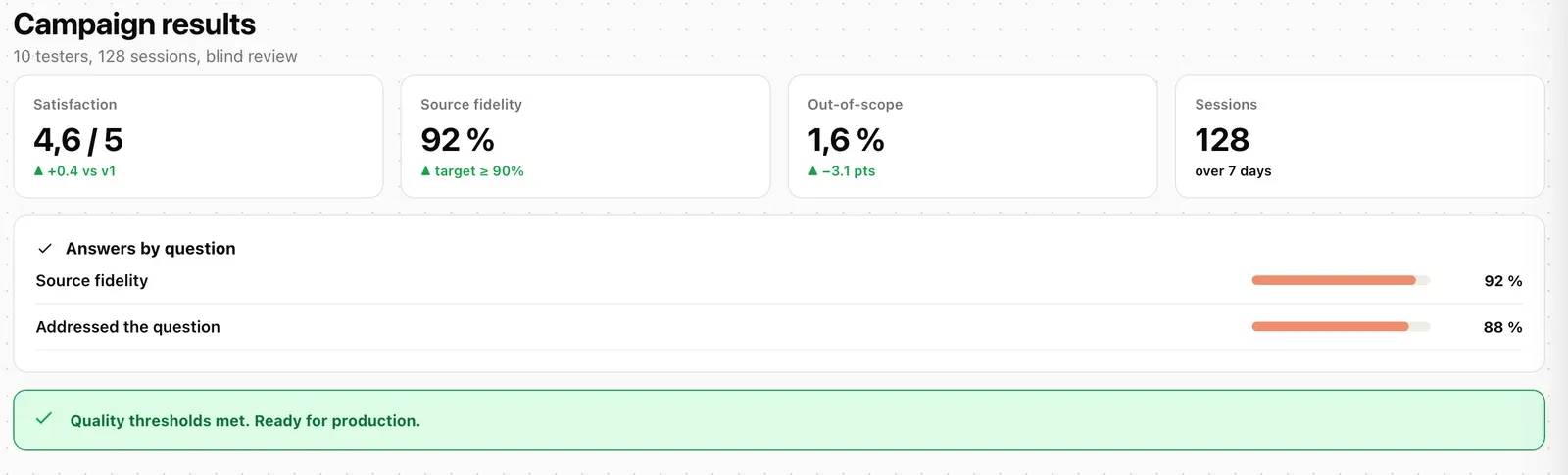
How do you know an AI agent is ready for the public?
A self-reported accuracy rate is not evidence. How review campaigns on the Bayes Platform let the professionals of a public service validate an agent's answers, blind, before it goes live.

Why we test every tool with a mid-range model first
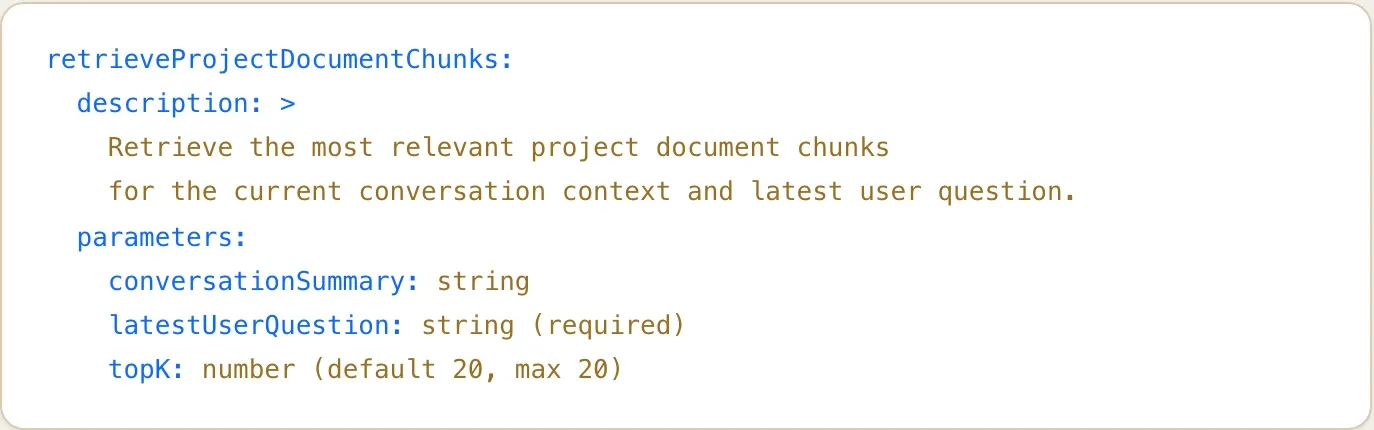
We named our RAG tool poorly, and Gemma 4 told us so. Here's what we learned about designing tool schemas for multi-model platforms.
Build your agents on the Bayes Platform
Tell us about your first use case, or install the open-source platform yourself.